IT Demand Management: How to Plan for IT Work Before It Overwhelms Your Team

July 15, 2026
5 min read

IT demand management makes all incoming work visible before it overwhelms your team. Learn how to build a practical intake, prioritisation, and planning process.

IT demand management is the practice of capturing, prioritising, and planning incoming requests for IT work before they pile up and stall your team. If your service desk regularly swings between firefighting backlogs and idle capacity, the root cause is almost always the same: demand arrives faster than it can be understood, triaged, or resourced. This guide explains what IT demand management is, why it matters alongside your ITSM processes, and how to build a practical approach that keeps your team ahead of the curve.

Why IT Demand Outpaces Capacity Without a Plan

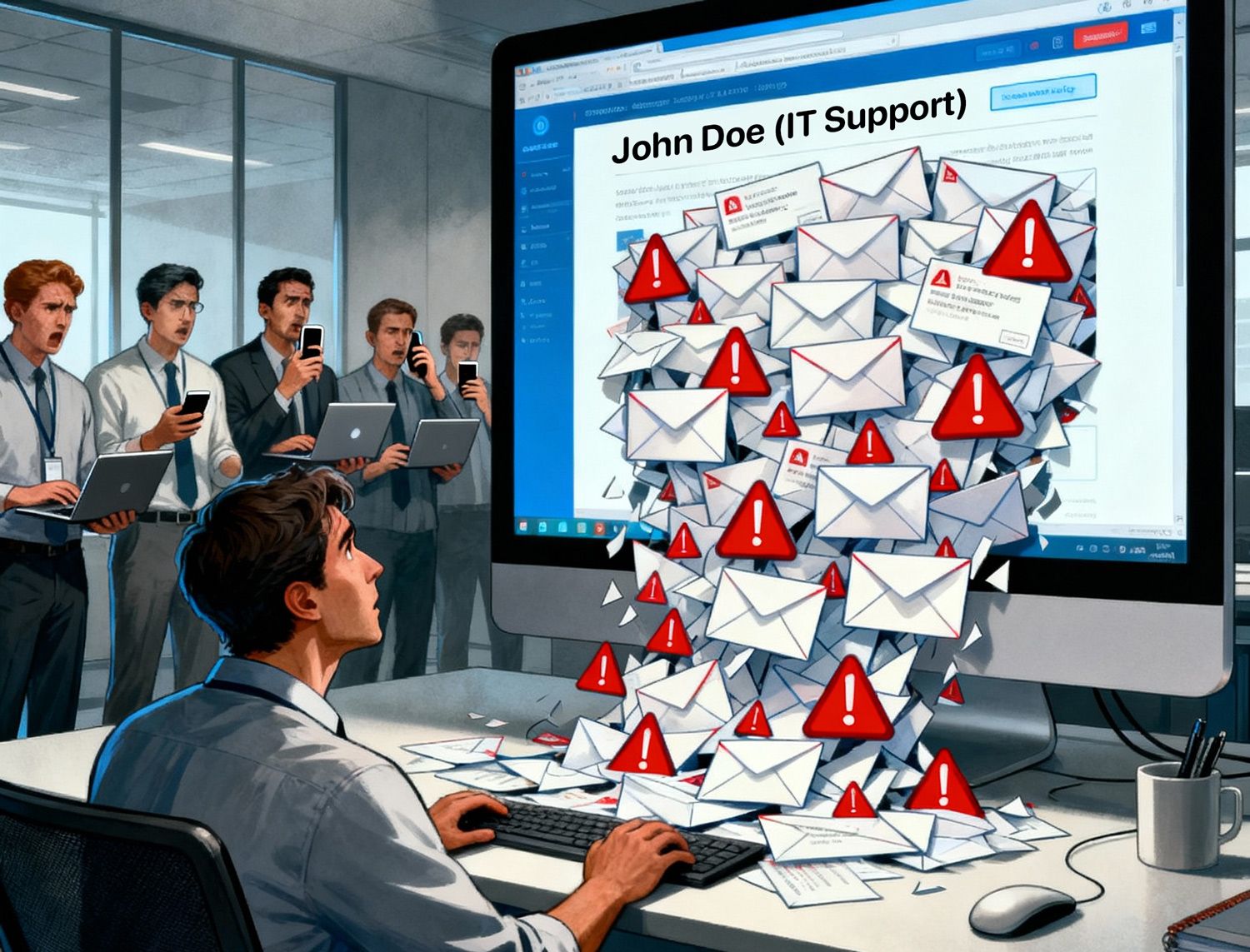
Every IT team faces a gap between the work that arrives and the resources available to handle it. Without a structured way to capture and categorise incoming demand, work accumulates in inboxes, chat threads, and informal conversations. High-priority projects compete silently with routine service requests. Planned change work collides with unplanned incident response.

The result is predictable:

  • Deadlines slip because no one had a full picture of what was already in flight
  • Skilled engineers get pulled from project work to handle tickets that could have been handled lower in the team
  • Stakeholders lose confidence in IT delivery because timelines are unreliable
  • Burnout rises as teams absorb demand spikes with no buffer

The problem is not usually a shortage of people. It is a shortage of visibility into what is being asked of those people across all the different channels demand arrives through.

What IT Demand Management Actually Covers

Blog image

Demand management is an ITIL v4 practice that sits within the service management value chain. Its purpose is to understand and influence what customers and users want from IT, and to make sure supply can meet that demand in a controlled, planned way.

In practical terms it covers three areas:

  • Capturing demand across all intake channels, including the service portal, email, project pipelines, and business requests that arrive informally
  • Classifying and prioritising that demand against business value, urgency, available capacity, and strategic fit
  • Planning and scheduling work so that the team takes on the right amount at the right time, rather than accepting everything and delivering nothing reliably

Demand management is closely related to capacity management, which focuses on whether the infrastructure and people can handle the load. The two practices work together: demand management shapes what is asked of IT, capacity management determines what IT can actually absorb. Neither works well without the other.

It is also distinct from service request management. A service request is a specific, known type of demand with a defined fulfilment process. Demand management is broader: it handles the full range of incoming asks, including new project proposals, business change requirements, and requests that do not yet have a defined fulfilment path.

How to Build an IT Demand Management Process

Blog image

A workable demand management process does not need to be complex. Most teams can start with four steps and refine from there.

Step 1: Establish a Single Intake Point

Every piece of demand should enter IT through one place, or at least be logged in one place regardless of where it originates. This is typically your ITSM platform's service portal or a dedicated demand intake form. The goal is to stop work from being invisible.

  • Publish a clear intake process so business stakeholders know how to submit requests
  • Train your team to redirect informal requests to the formal channel rather than absorbing them directly
  • Capture the business justification, expected benefit, and rough effort at intake, not just a title and description

Step 2: Categorise and Score Incoming Demand

Not all demand is equal. A structured scoring approach lets you compare requests that look very different on the surface.

Common scoring dimensions include:

  • Business value or strategic alignment
  • Urgency or time sensitivity
  • Estimated effort or complexity
  • Risk of not doing it
  • Dependencies on other work already in flight

You do not need a sophisticated scoring model to start. A simple high, medium, low rating against each dimension is enough to surface which requests deserve immediate attention and which can wait.

Step 3: Match Demand to Available Capacity

Once demand is visible and prioritised, map it against what your team can realistically deliver. This means knowing:

  • How much of your team's time is consumed by reactive work such as incidents and service requests on average
  • How much capacity is available for planned and project work in a given period
  • What work is already committed and cannot be displaced

If demand consistently exceeds available capacity, this step gives you the data to have a meaningful conversation with leadership about resourcing, scope, or timelines. Without it, the conversation stays at the level of "the team is busy" rather than "we have 40 hours of available project capacity per sprint and 120 hours of approved demand."

Step 4: Review and Adjust on a Regular Cadence

Demand management is not a one-time exercise. Run a regular demand review, weekly or fortnightly, where incoming requests are assessed, prioritised items are confirmed, and the pipeline is updated.

  • Keep the review short and structured, not an open-ended discussion
  • Include a representative from the business side where possible so prioritisation reflects actual business need
  • Use the review to flag demand that has been waiting too long and either progress it or formally defer it

Connecting Demand Management to Your Broader ITSM Practices

Blog image

Demand management does not operate in isolation. It connects directly to several other ITSM practices and its value multiplies when those connections are made explicit.

Change management is the most obvious link. A significant portion of demand will eventually result in a change request. Feeding prioritised demand into your change pipeline early means the change advisory board is not surprised by a sudden volume of requests at the end of a quarter.

Capacity management needs demand data to be useful. If your capacity planning is based only on historical load and does not account for known upcoming demand, it will consistently underestimate pressure on the team and the infrastructure.

Service level management benefits too. When you know what demand is coming and when, you can set realistic SLAs and OLAs rather than committing to timescales that assume infinite capacity.

Finally, demand data is valuable input for continual improvement. If you see the same category of demand appearing repeatedly, that is a signal either that a service is unreliable, that user training is missing, or that a self-service option should exist but does not.

Common Mistakes That Undermine Demand Management

Blog image

Even teams that understand the value of demand management often struggle to make it stick. These are the patterns that most commonly cause it to break down.

  • Treating demand management as a project management tool rather than an ongoing operational practice. It needs a permanent home in your ITSM workflow, not a spreadsheet that gets updated before quarterly reviews.
  • Failing to close the loop with stakeholders. If someone submits a request and hears nothing for three weeks, they will go around the process next time. Acknowledge receipt, provide a timeline for prioritisation, and communicate decisions even when the decision is to defer.
  • Capturing demand but not acting on the prioritisation. A backlog full of scored requests that never get reviewed is worse than no process at all because it creates false confidence.
  • Letting urgent always beat important. Reactive work will always feel more pressing than planned demand. Without a deliberate decision to protect capacity for planned work, reactive demand will consume everything.
  • Not involving the business in prioritisation. IT teams that prioritise demand in isolation often find that their priorities do not match what the business actually needs, which erodes trust and leads to demand bypassing the formal process.

Key Takeaways

Blog image
  • IT demand management is about making all incoming work visible, scored, and matched to real capacity before commitments are made
  • A single intake point, a simple scoring model, a capacity map, and a regular review cadence are enough to get started
  • Demand management connects directly to change management, capacity management, service level management, and continual improvement
  • The biggest failure mode is building the process but not protecting the capacity or communicating decisions back to stakeholders
  • Data from your demand pipeline is one of the most persuasive tools available when making the case for additional resourcing or scope reduction

TIKTING supports demand management by giving your team a single place to capture, categorise, and track all incoming work alongside your incident, change, and service request processes. Because everything sits in one platform, you can see the full picture of what is being asked of your team at any point in time. Odysseus asset discovery feeds accurate configuration and inventory data into TIKTING, which helps when estimating the effort and risk of demand that involves infrastructure changes. If you are evaluating whether TIKTING fits your team's needs, our case studies show how other IT teams have used it to bring structure to their demand and delivery pipelines.

Related Articles

IT Capacity Management: How to Plan Before Problems Hit

IT Capacity Management: How to Plan Before Problems Hit

Reactive capacity management causes incidents, SLA breaches, and budget surprises. Learn how to build a proactive process that keeps services ahead of demand.

IT Incident Management Best Practices: A Complete Guide

IT Incident Management Best Practices: A Complete Guide

Cut downtime and missed SLAs with these proven IT incident management best practices — from triage and escalation to SLA tracking and post-incident review.

SLA Management in ITSM: How to Set, Track, and Meet Targets

SLA Management in ITSM: How to Set, Track, and Meet Targets

Missing SLA targets? Learn how to set realistic service level agreements, track compliance in real time, and fix the root causes of breaches in your ITSM environment.

IT Knowledge Management: Build a Self-Service KB That Reduces Tickets

IT Knowledge Management: Build a Self-Service KB That Reduces Tickets

A dusty wiki nobody reads won't reduce your ticket queue. Learn how to build and maintain a self-service knowledge base that actually deflects tickets.

IT Escalation Management: How to Build a Process That Works

IT Escalation Management: How to Build a Process That Works

A weak escalation process is behind most missed SLAs and burned-out teams. Learn how to design clear tiers, triggers, and workflows that actually hold up.

IT Release Management: A Practical Guide for Service Desk Teams

IT Release Management: A Practical Guide for Service Desk Teams

A poorly managed release floods your service desk with incidents. This practical guide covers the full release management process, common mistakes, and a step-by-step checklist.

IT Configuration Management: Build a CMDB That Drives Real Value

IT Configuration Management: Build a CMDB That Drives Real Value

Most CMDBs fail within months of launch. Learn how to design, populate, and maintain a configuration management practice that teams actually trust and use.

IT Availability Management: How to Keep Services Up and SLAs Met

IT Availability Management: How to Keep Services Up and SLAs Met

Learn how to define availability targets, measure uptime accurately, and build a repeatable process that keeps services running and SLAs met.

IT Vendor Management: How to Govern Suppliers and Cut Risk

IT Vendor Management: How to Govern Suppliers and Cut Risk

Ungoverned suppliers cause outages and missed SLAs. Learn how to build a vendor management process that tracks contracts, measures performance, and integrates with ITSM.

IT Event Management: How to Cut Noise and Catch What Matters

IT Event Management: How to Cut Noise and Catch What Matters

IT event management turns monitoring noise into actionable signals. Learn how to categorise events, beat alert fatigue, and build a process that catches issues before users do.

IT Asset Depreciation: How to Track and Plan for End-of-Life Assets

IT Asset Depreciation: How to Track and Plan for End-of-Life Assets

Learn how to track IT asset depreciation, plan hardware end-of-life cycles, and connect retirement workflows to your ITSM process before budget surprises hit.

IT Change Management Process: A Step-by-Step Guide for 2026

IT Change Management Process: A Step-by-Step Guide for 2026

A poor IT change management process causes outages and compliance gaps. Learn the ITIL v4 workflow, change types, CAB best practices, and key metrics in this step-by-step guide.

IT Service Level Management: A Practical ITIL v4 Guide for 2026

IT Service Level Management: A Practical ITIL v4 Guide for 2026

IT service level management is more than writing SLAs. Learn how to define targets, build OLAs, run reviews, and drive real improvement with this ITIL v4 guide.

ITSM for Facilities Management: Run a Smarter Helpdesk in 2026

ITSM for Facilities Management: Run a Smarter Helpdesk in 2026

Learn how ITSM practices — service catalogs, SLAs, and incident management — can transform a reactive facilities team into a structured, measurable operation.

IT Service Request Management: A Complete Process Guide for 2026

IT Service Request Management: A Complete Process Guide for 2026

Learn how to build a scalable service request management process — from service catalogue design and fulfilment workflows to SLAs, automation, and CMDB integration.

ITSM for Operations Teams: Streamline Requests and Work Orders in 2026

ITSM for Operations Teams: Streamline Requests and Work Orders in 2026

Operations teams still run on email and spreadsheets. Learn how ITSM principles — service catalogs, SLAs, and work order workflows — bring structure and visibility to operations.

IT Problem Management: How to Stop Recurring Incidents for Good

IT Problem Management: How to Stop Recurring Incidents for Good

Recurring incidents drain your team. Learn how IT problem management works, the five-step workflow to find root causes, and how to stop the cycle for good.

IT Service Continuity Management: A Practical ITSM Guide

IT Service Continuity Management: A Practical ITSM Guide

Learn how to build a practical IT service continuity management programme: BIA, recovery strategies, testing, and how ITSCM connects to your wider ITSM practices.

IT Major Incident Management: A Practical Process Guide for 2026

IT Major Incident Management: A Practical Process Guide for 2026

Major incidents need a process of their own. Learn how to declare, manage, communicate, and review major incidents with a practical step-by-step framework.

IT Asset Management Best Practices: A Complete 2026 Guide

IT Asset Management Best Practices: A Complete 2026 Guide

Discover the IT asset management best practices that keep your CMDB accurate, license costs controlled, and your IT estate fully visible in 2025.

IT Asset Lifecycle Management: A Complete Guide for 2026

IT Asset Lifecycle Management: A Complete Guide for 2026

Learn the six stages of IT asset lifecycle management, the most common failure points at each stage, and a practical checklist to improve visibility and control.

ITSM for Sales Teams: Manage Requests and Approvals in 2026

ITSM for Sales Teams: Manage Requests and Approvals in 2026

Sales teams lose hours chasing approvals and IT requests. Learn how to apply ESM to sales service delivery, build a service catalogue, and automate deal desk approvals.

ITSM for Manufacturing Teams: Manage Requests and Downtime in 2026

ITSM for Manufacturing Teams: Manage Requests and Downtime in 2026

Discover how ITSM principles reduce unplanned downtime and bring order to manufacturing request management — from equipment faults to planned maintenance.

Showcases TIKTING at ITCN Asia 2026 in Lahore

Showcases TIKTING at ITCN Asia 2026 in Lahore

ITDEVTECH showcased its flagship solution TIKTING at ITCN Asia 2026 in Lahore, demonstrating how it streamlines IT operations and empowers organizations.

Why Email-Based IT Support Fails in Large Organizations

Why Email-Based IT Support Fails in Large Organizations

Email-based IT support fails in large organizations due to lost requests, no accountability, poor visibility, and compliance risks. Learn why.

CMDB Best Practices: How to Build and Maintain a Clean CMDB

CMDB Best Practices: How to Build and Maintain a Clean CMDB

A stale CMDB costs your team time and trust. Learn how to scope, build, and maintain a clean CMDB with practical steps and a maintenance checklist.

IT License Compliance: How to Audit and Stay Audit-Ready

IT License Compliance: How to Audit and Stay Audit-Ready

A failed software audit can mean penalties and emergency spend. Learn how to build an IT license compliance programme that keeps you audit-ready year-round.

IT Change Advisory Board: How to Run a CAB That Works

IT Change Advisory Board: How to Run a CAB That Works

A change advisory board only adds value if it's run well. Learn who should attend, how to structure meetings, and which metrics keep your CAB improving.

IT Onboarding and Offboarding: A Service Desk Process Guide

IT Onboarding and Offboarding: A Service Desk Process Guide

Ad hoc onboarding and offboarding leaves accounts open and assets untracked. Learn how to build a repeatable, ITIL-aligned process that closes both gaps.

IT Service Catalog: How to Build One That Actually Gets Used

IT Service Catalog: How to Build One That Actually Gets Used

Learn how to build an IT service catalog users actually adopt — with the right structure, intake forms, fulfillment workflows, SLA targets, and a quarterly review process.

IT Ticket Prioritization: How to Triage Service Desk Requests Right

IT Ticket Prioritization: How to Triage Service Desk Requests Right

Ad hoc ticket triage causes SLA breaches and burned-out teams. Learn how to build an ITIL-aligned priority framework that scales with your service desk.

IT Asset Audit: How to Run One That Actually Finds the Gaps

IT Asset Audit: How to Run One That Actually Finds the Gaps

Learn how to plan and run an IT asset audit that finds real gaps — with a step-by-step process, common failure points, and tips for turning findings into lasting improvements.

IT Continual Improvement: How to Build a Process That Sticks

IT Continual Improvement: How to Build a Process That Sticks

Continual improvement is central to ITIL v4 but rarely done well. Learn how to build a register, prioritise work, and embed improvement into everyday ITSM.

IT First Contact Resolution: How to Improve FCR on Your Service Desk

IT First Contact Resolution: How to Improve FCR on Your Service Desk

Low first contact resolution drains your service desk. Learn what causes FCR to drop and the step-by-step process to improve it across your team.

IT Service Desk Shift-Left Strategy: Reduce Escalations and Costs

IT Service Desk Shift-Left Strategy: Reduce Escalations and Costs

Learn how to build a practical shift-left strategy that reduces escalations, improves first-contact resolution, and cuts service desk costs — step by step.

IT Service Desk Reporting: Build Reports That Drive Real Improvement

IT Service Desk Reporting: Build Reports That Drive Real Improvement

Most service desk reports produce numbers, not decisions. Learn how to build IT service desk reports that drive real improvement across every audience level.

IT Service Desk Ticket Backlog: How to Clear It and Keep It Clear

IT Service Desk Ticket Backlog: How to Clear It and Keep It Clear

A growing ticket backlog signals a broken support process. Learn how to audit, clear, and prevent your IT service desk backlog with practical steps.

IT Mean Time to Resolve: How to Measure and Improve MTTR

IT Mean Time to Resolve: How to Measure and Improve MTTR

MTTR is a critical service desk metric — but most teams measure it wrong. Learn how to calculate, segment, and systematically reduce mean time to resolve.

IT Asset Tracking: How to Know Where Every Asset Is at All Times

IT Asset Tracking: How to Know Where Every Asset Is at All Times

Most IT teams think their asset tracking is reliable — until an audit proves otherwise. Learn how to build a process that stays accurate without manual effort.

ITSM for HR Teams: How to Run HR Service Delivery Like IT

ITSM for HR Teams: How to Run HR Service Delivery Like IT

HR teams drown in email requests with no SLAs, no tracking, and no self-service. Learn how ITSM principles transform HR service delivery step by step.

ITSM for Finance Teams: Streamline Requests and Stay Compliant

ITSM for Finance Teams: Streamline Requests and Stay Compliant

Finance teams are internal service providers. Learn how applying ITSM for finance streamlines requests, enforces approvals, and builds the audit trail compliance demands.

ITSM for Legal Teams: Manage Requests, Contracts and Compliance

ITSM for Legal Teams: Manage Requests, Contracts and Compliance

Legal teams drown in emailed requests with no tracking or accountability. Learn how ITSM brings structure, SLAs and audit-ready workflows to in-house legal operations.

IT Service Desk Metrics That Actually Matter in 2026

IT Service Desk Metrics That Actually Matter in 2026

Tracking the wrong service desk metrics wastes time and hides real problems. Learn which KPIs actually improve outcomes and how to build a reporting cadence that drives action.

ITSM Tool Selection: How to Choose the Right Platform in 2026

ITSM Tool Selection: How to Choose the Right Platform in 2026

Choosing the wrong ITSM tool costs years of workarounds. This guide covers requirements, shortlisting, POC testing, and total cost of ownership to help you decide.

IT Self-Service Portal Best Practices: Reduce Ticket Volume in 2026

IT Self-Service Portal Best Practices: Reduce Ticket Volume in 2026

Most self-service portals go unused. Learn practical steps to design, populate and promote a portal that genuinely deflects tickets and improves service desk efficiency.

ITSM vs ITAM: Key Differences and Why You Need Both in 2026

ITSM vs ITAM: Key Differences and Why You Need Both in 2026

ITSM and ITAM solve different problems, but gaps between them cause incidents, audit risk, and failed changes. Learn the differences and how to connect them.

ITSM for Customer Support Teams: Deliver Better Service in 2026

ITSM for Customer Support Teams: Deliver Better Service in 2026

Customer support teams face the same problems ITSM solves. Learn how to apply ITIL practices, SLAs, and automation to deliver faster, more consistent support.

Shadow IT Discovery: How to Find and Manage Unauthorized Tools

Shadow IT Discovery: How to Find and Manage Unauthorized Tools

Shadow IT grows when users bypass IT to get things done. Learn how to discover unauthorized tools and devices, manage the risk, and fix the root cause.

Network Asset Discovery: How to Find Every Device on Your Network

Network Asset Discovery: How to Find Every Device on Your Network

Network asset discovery finds every device on your network and keeps your CMDB accurate. Learn how it works and how to build a process that lasts.

IT Service Desk Automation: What to Automate and Where to Start

IT Service Desk Automation: What to Automate and Where to Start

Learn which service desk tasks to automate first, how to prioritise them, and a practical checklist to reduce ticket volume and improve SLA compliance.

IT Asset Discovery Tools: How to Choose the Right One in 2026

IT Asset Discovery Tools: How to Choose the Right One in 2026

Choosing the wrong IT asset discovery tool leaves dangerous blind spots. Learn which discovery methods matter, what to evaluate, and how to avoid the most common mistakes.