SLA Management in ITSM: How to Set, Track, and Meet Targets

July 15, 2026
6 min read

Missing SLA targets? Learn how to set realistic service level agreements, track compliance in real time, and fix the root causes of breaches in your ITSM environment.

SLA management is one of the most visible ways an IT service desk proves its value — and one of the easiest places to lose stakeholder trust when things go wrong. If your team is missing response or resolution targets, struggling to report on them accurately, or running SLAs that no longer reflect what the business actually needs, this guide walks through how to design, track, and continuously improve service level agreements in a modern ITSM environment.

What Is SLA Management and Why It Matters

A service level agreement is a documented commitment between an IT team and the users or business units it serves. It defines how quickly the team will respond to and resolve different types of requests or incidents. SLA management is the ongoing process of setting those targets, monitoring performance against them, and taking action when they are at risk or being breached.

Most service desks have some form of SLA in place, but many treat them as a box-ticking exercise rather than a genuine performance tool. When SLAs are poorly designed or inconsistently tracked, they create more problems than they solve:

  • Agents do not know what they should be prioritising at any given moment
  • Managers cannot tell whether the team is actually performing well or just getting lucky
  • Business stakeholders lose confidence in IT because they see breaches but no explanation or improvement

Good SLA management connects the service desk to business outcomes. It gives agents clarity, gives managers data, and gives stakeholders a basis for trust.

SLAs, OLAs, and Underpinning Contracts

Before setting targets, it helps to understand the three layers of service commitment that ITIL v4 describes.

An SLA is the agreement with the customer or end user. An operational level agreement (OLA) is an internal agreement between IT teams that supports the SLA — for example, a commitment from the network team to respond to escalations within a certain window. An underpinning contract (UC) is a similar commitment from an external supplier.

If your SLAs are being missed, the root cause is often a broken OLA or UC rather than a failure on the service desk itself. Mapping these relationships is a prerequisite for managing SLAs effectively.

How to Set Realistic SLA Targets

Blog image

The most common mistake organisations make is copying SLA targets from a template or a previous tool without validating them against actual performance data or business requirements. Targets that are too aggressive create constant breach notifications that agents start ignoring. Targets that are too loose provide no meaningful pressure to improve.

Start With Priority Tiers

Most ITSM platforms categorise tickets by priority, typically using a matrix of urgency and impact. SLA targets should be tied to these priority levels rather than applied uniformly across all tickets.

A typical four-tier model might look like:

  • Priority 1 (critical): affects many users or a business-critical system — response within 15 minutes, resolution within 4 hours
  • Priority 2 (high): significant impact on a group or key process — response within 1 hour, resolution within 8 hours
  • Priority 3 (medium): moderate impact, workaround available — response within 4 hours, resolution within 24 hours
  • Priority 4 (low): minimal impact, cosmetic or informational — response within 8 hours, resolution within 72 hours

These are illustrative only. Your actual targets should reflect your team's capacity, the nature of your services, and what the business genuinely needs.

Validate Against Historical Data

Before committing to targets, pull at least three months of ticket data and look at your actual median response and resolution times by priority. If your current median resolution time for medium-priority tickets is 30 hours, setting a 24-hour target is possible but will require process changes to achieve. Setting an 8-hour target will produce immediate, widespread breaches that demoralise the team and mislead stakeholders.

Agree Targets With the Business

SLAs should be negotiated, not dictated. Involve service owners and business unit representatives in the conversation. This does two things: it surfaces requirements you might not have been aware of, and it creates shared ownership of the targets. Stakeholders who helped set an SLA are more likely to understand and accept the occasional breach.

Tracking SLA Compliance in Real Time

Blog image

Setting targets is the easier half of SLA management. The harder part is creating the operational conditions that allow agents and managers to act on SLA data before a breach happens.

SLA Clocks and Business Hours

Most ITSM platforms calculate SLA time using a clock that starts when a ticket is logged and pauses under certain conditions — for example, when the ticket is waiting for a response from the user. Understanding how your platform handles these pauses is critical, because errors here silently distort your compliance data.

Key questions to answer for your platform:

  • Does the SLA clock pause when a ticket is placed on hold or waiting for third-party input
  • Are SLA targets calculated against business hours or calendar hours, and does this match your SLA documentation
  • How are tickets logged outside business hours treated — does the clock start immediately or at the beginning of the next working day

These are not edge cases. They affect a significant proportion of tickets in most environments.

Escalation and Breach Alerts

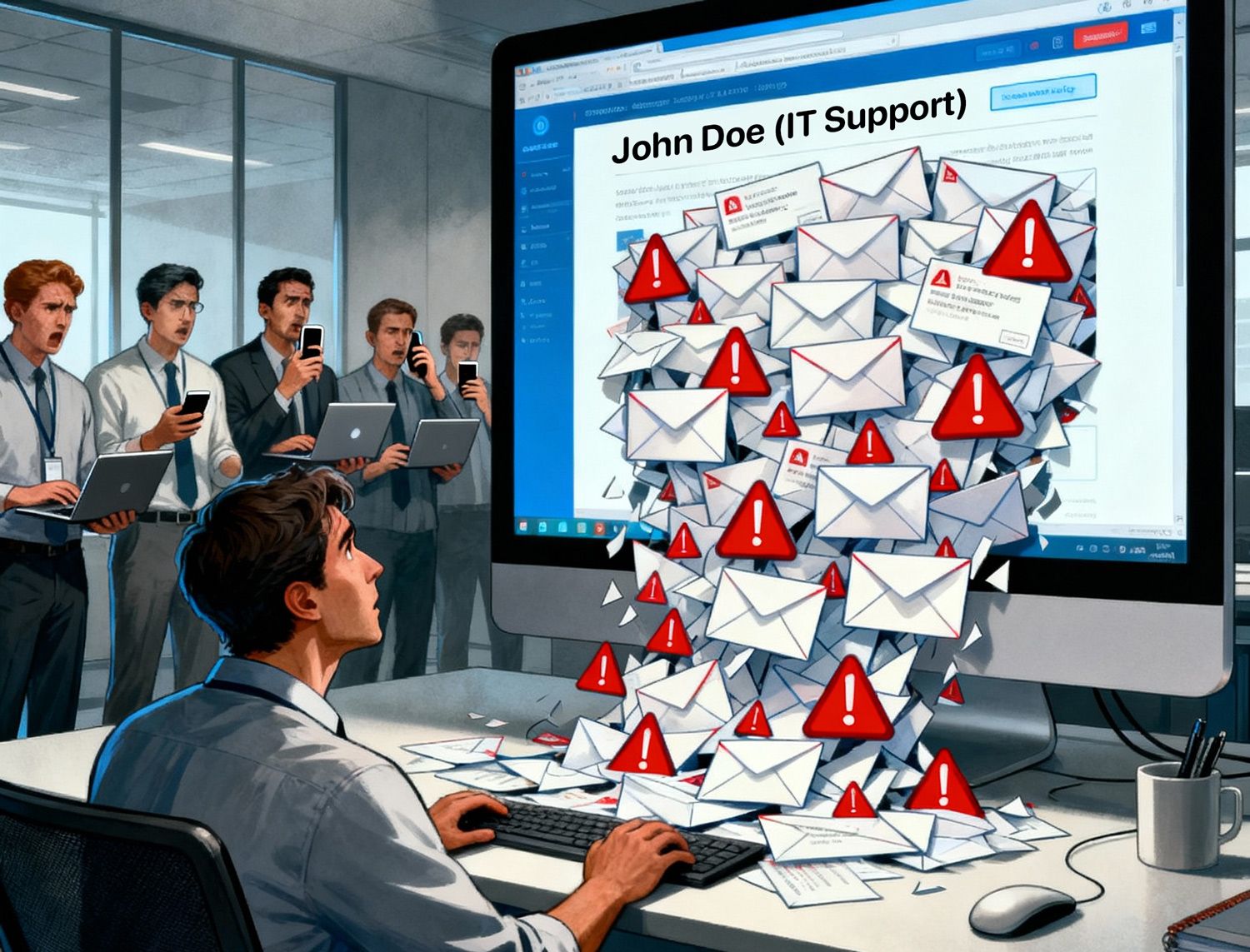
Effective SLA tracking is proactive, not retrospective. Your service desk platform should surface tickets that are approaching their SLA deadline before the breach occurs, not just flag them after the fact.

A practical escalation model:

  • Alert the assigned agent when a ticket reaches 50% of its SLA window
  • Alert the team leader when a ticket reaches 75%
  • Escalate automatically to a senior agent or manager at 90%, with a notification to the requester if appropriate

This gives the team time to act. It also creates a clear audit trail showing that the escalation process was followed, which matters when you are reviewing breaches with stakeholders.

Common Reasons SLAs Are Missed

Blog image

Understanding why breaches happen is as important as preventing them. Without this analysis, teams tend to apply the same generic fixes repeatedly without addressing the actual causes.

The most frequent root causes of SLA breaches include:

  • Tickets assigned to agents who are absent, on leave, or overloaded with no automatic reassignment
  • Priority assigned incorrectly at logging, meaning a high-impact ticket is treated as low priority
  • Tickets stuck waiting for approval or information with no mechanism to chase or escalate
  • Lack of visibility across the queue — agents working from personal inboxes or notification feeds rather than a shared view
  • Understaffing at peak periods, particularly Monday mornings or after public holidays
  • Third-party or supplier delays that are not tracked as separate OLA or UC breaches

Categorising your breaches by root cause each month gives you the data to have specific, actionable conversations rather than general pressure to "do better".

Reporting SLA Performance to Stakeholders

Blog image

SLA reports serve different audiences and should be tailored accordingly. A weekly operational report for the service desk manager should look different from a monthly summary for the IT director or CIO.

Operational Reports

For day-to-day management, the most useful SLA metrics are:

  • SLA compliance rate by priority tier for the current period
  • Number of breaches by category or team, with root cause notes
  • Tickets currently at risk of breach in the next four hours
  • Average response and resolution times compared to targets

Executive Reports

For senior stakeholders, focus on trend lines and business impact rather than raw ticket counts. A compliance rate that improved from 78% to 89% over a quarter tells a clearer story than a list of individual breaches. Pair the numbers with a short narrative explaining what changed and what is planned next.

Transparency matters here. Stakeholders who receive honest reporting — including acknowledgement of where targets were missed and why — develop more trust in the IT team than those who receive only positive metrics.

Continuously Improving Your SLA Framework

Blog image

SLA management is not a one-time configuration task. Targets that made sense when a platform was first deployed may become outdated as the business grows, the team changes, or new services are introduced.

A practical SLA review cycle:

  • Review SLA targets formally at least once per year, or after any significant change to team size or service scope
  • Review breach patterns monthly and assign ownership of root cause investigations
  • Survey end users periodically on whether response times meet their expectations — perception gaps are as damaging as actual breaches
  • Update OLAs and underpinning contracts whenever SLA targets change, to ensure the supporting commitments remain aligned

Connecting SLA Data to Problem Management

Recurring SLA breaches in the same category or for the same type of request are a signal worth investigating through your problem management process. If the same configuration error causes a P2 incident three times in a quarter, each one generating a near-breach, that pattern deserves a problem record and a root cause analysis — not just another incident ticket.

Key Takeaways

Blog image
  • SLA management requires three things working together: well-set targets, real-time tracking, and a structured response to breaches
  • Targets should be validated against historical data and agreed with the business, not copied from a template
  • Proactive escalation alerts — before a breach, not after — are the single most effective operational change most teams can make
  • Breach analysis by root cause is more useful than overall compliance rates alone
  • SLA frameworks should be reviewed regularly, not treated as permanent configuration

TIKTING includes built-in SLA management with configurable priority tiers, business-hour calendars, escalation rules, and real-time breach dashboards — designed to give service desk teams the visibility they need without complex setup. If your team is also working to keep asset and configuration data accurate alongside your SLA tracking, Odysseus asset discovery feeds current endpoint data directly into TIKTING, reducing the manual effort involved in accurate ticket prioritisation and impact assessment.

Related Articles

ITSM for Facilities Management: Run a Smarter Helpdesk in 2026

ITSM for Facilities Management: Run a Smarter Helpdesk in 2026

Learn how ITSM practices — service catalogs, SLAs, and incident management — can transform a reactive facilities team into a structured, measurable operation.

IT Service Continuity Management: A Practical ITSM Guide

IT Service Continuity Management: A Practical ITSM Guide

Learn how to build a practical IT service continuity management programme: BIA, recovery strategies, testing, and how ITSCM connects to your wider ITSM practices.

ITSM for Sales Teams: Manage Requests and Approvals in 2026

ITSM for Sales Teams: Manage Requests and Approvals in 2026

Sales teams lose hours chasing approvals and IT requests. Learn how to apply ESM to sales service delivery, build a service catalogue, and automate deal desk approvals.

ITSM for Manufacturing Teams: Manage Requests and Downtime in 2026

ITSM for Manufacturing Teams: Manage Requests and Downtime in 2026

Discover how ITSM principles reduce unplanned downtime and bring order to manufacturing request management — from equipment faults to planned maintenance.

IT Incident Management Best Practices: A Complete Guide

IT Incident Management Best Practices: A Complete Guide

Cut downtime and missed SLAs with these proven IT incident management best practices — from triage and escalation to SLA tracking and post-incident review.

IT Knowledge Management: Build a Self-Service KB That Reduces Tickets

IT Knowledge Management: Build a Self-Service KB That Reduces Tickets

A dusty wiki nobody reads won't reduce your ticket queue. Learn how to build and maintain a self-service knowledge base that actually deflects tickets.

IT Escalation Management: How to Build a Process That Works

IT Escalation Management: How to Build a Process That Works

A weak escalation process is behind most missed SLAs and burned-out teams. Learn how to design clear tiers, triggers, and workflows that actually hold up.

IT Release Management: A Practical Guide for Service Desk Teams

IT Release Management: A Practical Guide for Service Desk Teams

A poorly managed release floods your service desk with incidents. This practical guide covers the full release management process, common mistakes, and a step-by-step checklist.

IT Configuration Management: Build a CMDB That Drives Real Value

IT Configuration Management: Build a CMDB That Drives Real Value

Most CMDBs fail within months of launch. Learn how to design, populate, and maintain a configuration management practice that teams actually trust and use.

IT Availability Management: How to Keep Services Up and SLAs Met

IT Availability Management: How to Keep Services Up and SLAs Met

Learn how to define availability targets, measure uptime accurately, and build a repeatable process that keeps services running and SLAs met.

IT Capacity Management: How to Plan Before Problems Hit

IT Capacity Management: How to Plan Before Problems Hit

Reactive capacity management causes incidents, SLA breaches, and budget surprises. Learn how to build a proactive process that keeps services ahead of demand.

IT Vendor Management: How to Govern Suppliers and Cut Risk

IT Vendor Management: How to Govern Suppliers and Cut Risk

Ungoverned suppliers cause outages and missed SLAs. Learn how to build a vendor management process that tracks contracts, measures performance, and integrates with ITSM.

IT Event Management: How to Cut Noise and Catch What Matters

IT Event Management: How to Cut Noise and Catch What Matters

IT event management turns monitoring noise into actionable signals. Learn how to categorise events, beat alert fatigue, and build a process that catches issues before users do.

IT Asset Depreciation: How to Track and Plan for End-of-Life Assets

IT Asset Depreciation: How to Track and Plan for End-of-Life Assets

Learn how to track IT asset depreciation, plan hardware end-of-life cycles, and connect retirement workflows to your ITSM process before budget surprises hit.

IT Demand Management: How to Plan for IT Work Before It Overwhelms Your Team

IT Demand Management: How to Plan for IT Work Before It Overwhelms Your Team

IT demand management makes all incoming work visible before it overwhelms your team. Learn how to build a practical intake, prioritisation, and planning process.

ITSM for HR Teams: How to Run HR Service Delivery Like IT

ITSM for HR Teams: How to Run HR Service Delivery Like IT

HR teams drown in email requests with no SLAs, no tracking, and no self-service. Learn how ITSM principles transform HR service delivery step by step.

ITSM for Finance Teams: Streamline Requests and Stay Compliant

ITSM for Finance Teams: Streamline Requests and Stay Compliant

Finance teams are internal service providers. Learn how applying ITSM for finance streamlines requests, enforces approvals, and builds the audit trail compliance demands.

ITSM for Legal Teams: Manage Requests, Contracts and Compliance

ITSM for Legal Teams: Manage Requests, Contracts and Compliance

Legal teams drown in emailed requests with no tracking or accountability. Learn how ITSM brings structure, SLAs and audit-ready workflows to in-house legal operations.

IT Change Management Process: A Step-by-Step Guide for 2026

IT Change Management Process: A Step-by-Step Guide for 2026

A poor IT change management process causes outages and compliance gaps. Learn the ITIL v4 workflow, change types, CAB best practices, and key metrics in this step-by-step guide.

ITSM Tool Selection: How to Choose the Right Platform in 2026

ITSM Tool Selection: How to Choose the Right Platform in 2026

Choosing the wrong ITSM tool costs years of workarounds. This guide covers requirements, shortlisting, POC testing, and total cost of ownership to help you decide.

ITSM vs ITAM: Key Differences and Why You Need Both in 2026

ITSM vs ITAM: Key Differences and Why You Need Both in 2026

ITSM and ITAM solve different problems, but gaps between them cause incidents, audit risk, and failed changes. Learn the differences and how to connect them.

ITSM for Customer Support Teams: Deliver Better Service in 2026

ITSM for Customer Support Teams: Deliver Better Service in 2026

Customer support teams face the same problems ITSM solves. Learn how to apply ITIL practices, SLAs, and automation to deliver faster, more consistent support.

IT Service Level Management: A Practical ITIL v4 Guide for 2026

IT Service Level Management: A Practical ITIL v4 Guide for 2026

IT service level management is more than writing SLAs. Learn how to define targets, build OLAs, run reviews, and drive real improvement with this ITIL v4 guide.

IT Service Request Management: A Complete Process Guide for 2026

IT Service Request Management: A Complete Process Guide for 2026

Learn how to build a scalable service request management process — from service catalogue design and fulfilment workflows to SLAs, automation, and CMDB integration.

ITSM for Operations Teams: Streamline Requests and Work Orders in 2026

ITSM for Operations Teams: Streamline Requests and Work Orders in 2026

Operations teams still run on email and spreadsheets. Learn how ITSM principles — service catalogs, SLAs, and work order workflows — bring structure and visibility to operations.

IT Problem Management: How to Stop Recurring Incidents for Good

IT Problem Management: How to Stop Recurring Incidents for Good

Recurring incidents drain your team. Learn how IT problem management works, the five-step workflow to find root causes, and how to stop the cycle for good.

IT Major Incident Management: A Practical Process Guide for 2026

IT Major Incident Management: A Practical Process Guide for 2026

Major incidents need a process of their own. Learn how to declare, manage, communicate, and review major incidents with a practical step-by-step framework.

IT Asset Management Best Practices: A Complete 2026 Guide

IT Asset Management Best Practices: A Complete 2026 Guide

Discover the IT asset management best practices that keep your CMDB accurate, license costs controlled, and your IT estate fully visible in 2025.

IT Asset Lifecycle Management: A Complete Guide for 2026

IT Asset Lifecycle Management: A Complete Guide for 2026

Learn the six stages of IT asset lifecycle management, the most common failure points at each stage, and a practical checklist to improve visibility and control.

Showcases TIKTING at ITCN Asia 2026 in Lahore

Showcases TIKTING at ITCN Asia 2026 in Lahore

ITDEVTECH showcased its flagship solution TIKTING at ITCN Asia 2026 in Lahore, demonstrating how it streamlines IT operations and empowers organizations.

Why Email-Based IT Support Fails in Large Organizations

Why Email-Based IT Support Fails in Large Organizations

Email-based IT support fails in large organizations due to lost requests, no accountability, poor visibility, and compliance risks. Learn why.

CMDB Best Practices: How to Build and Maintain a Clean CMDB

CMDB Best Practices: How to Build and Maintain a Clean CMDB

A stale CMDB costs your team time and trust. Learn how to scope, build, and maintain a clean CMDB with practical steps and a maintenance checklist.

IT License Compliance: How to Audit and Stay Audit-Ready

IT License Compliance: How to Audit and Stay Audit-Ready

A failed software audit can mean penalties and emergency spend. Learn how to build an IT license compliance programme that keeps you audit-ready year-round.

IT Change Advisory Board: How to Run a CAB That Works

IT Change Advisory Board: How to Run a CAB That Works

A change advisory board only adds value if it's run well. Learn who should attend, how to structure meetings, and which metrics keep your CAB improving.

IT Onboarding and Offboarding: A Service Desk Process Guide

IT Onboarding and Offboarding: A Service Desk Process Guide

Ad hoc onboarding and offboarding leaves accounts open and assets untracked. Learn how to build a repeatable, ITIL-aligned process that closes both gaps.

IT Service Catalog: How to Build One That Actually Gets Used

IT Service Catalog: How to Build One That Actually Gets Used

Learn how to build an IT service catalog users actually adopt — with the right structure, intake forms, fulfillment workflows, SLA targets, and a quarterly review process.

IT Ticket Prioritization: How to Triage Service Desk Requests Right

IT Ticket Prioritization: How to Triage Service Desk Requests Right

Ad hoc ticket triage causes SLA breaches and burned-out teams. Learn how to build an ITIL-aligned priority framework that scales with your service desk.

IT Asset Audit: How to Run One That Actually Finds the Gaps

IT Asset Audit: How to Run One That Actually Finds the Gaps

Learn how to plan and run an IT asset audit that finds real gaps — with a step-by-step process, common failure points, and tips for turning findings into lasting improvements.

IT Continual Improvement: How to Build a Process That Sticks

IT Continual Improvement: How to Build a Process That Sticks

Continual improvement is central to ITIL v4 but rarely done well. Learn how to build a register, prioritise work, and embed improvement into everyday ITSM.

IT First Contact Resolution: How to Improve FCR on Your Service Desk

IT First Contact Resolution: How to Improve FCR on Your Service Desk

Low first contact resolution drains your service desk. Learn what causes FCR to drop and the step-by-step process to improve it across your team.

IT Service Desk Shift-Left Strategy: Reduce Escalations and Costs

IT Service Desk Shift-Left Strategy: Reduce Escalations and Costs

Learn how to build a practical shift-left strategy that reduces escalations, improves first-contact resolution, and cuts service desk costs — step by step.

IT Service Desk Reporting: Build Reports That Drive Real Improvement

IT Service Desk Reporting: Build Reports That Drive Real Improvement

Most service desk reports produce numbers, not decisions. Learn how to build IT service desk reports that drive real improvement across every audience level.

IT Service Desk Ticket Backlog: How to Clear It and Keep It Clear

IT Service Desk Ticket Backlog: How to Clear It and Keep It Clear

A growing ticket backlog signals a broken support process. Learn how to audit, clear, and prevent your IT service desk backlog with practical steps.

IT Mean Time to Resolve: How to Measure and Improve MTTR

IT Mean Time to Resolve: How to Measure and Improve MTTR

MTTR is a critical service desk metric — but most teams measure it wrong. Learn how to calculate, segment, and systematically reduce mean time to resolve.

IT Asset Tracking: How to Know Where Every Asset Is at All Times

IT Asset Tracking: How to Know Where Every Asset Is at All Times

Most IT teams think their asset tracking is reliable — until an audit proves otherwise. Learn how to build a process that stays accurate without manual effort.

IT Service Desk Metrics That Actually Matter in 2026

IT Service Desk Metrics That Actually Matter in 2026

Tracking the wrong service desk metrics wastes time and hides real problems. Learn which KPIs actually improve outcomes and how to build a reporting cadence that drives action.

IT Self-Service Portal Best Practices: Reduce Ticket Volume in 2026

IT Self-Service Portal Best Practices: Reduce Ticket Volume in 2026

Most self-service portals go unused. Learn practical steps to design, populate and promote a portal that genuinely deflects tickets and improves service desk efficiency.

Shadow IT Discovery: How to Find and Manage Unauthorized Tools

Shadow IT Discovery: How to Find and Manage Unauthorized Tools

Shadow IT grows when users bypass IT to get things done. Learn how to discover unauthorized tools and devices, manage the risk, and fix the root cause.

Network Asset Discovery: How to Find Every Device on Your Network

Network Asset Discovery: How to Find Every Device on Your Network

Network asset discovery finds every device on your network and keeps your CMDB accurate. Learn how it works and how to build a process that lasts.

IT Service Desk Automation: What to Automate and Where to Start

IT Service Desk Automation: What to Automate and Where to Start

Learn which service desk tasks to automate first, how to prioritise them, and a practical checklist to reduce ticket volume and improve SLA compliance.

IT Asset Discovery Tools: How to Choose the Right One in 2026

IT Asset Discovery Tools: How to Choose the Right One in 2026

Choosing the wrong IT asset discovery tool leaves dangerous blind spots. Learn which discovery methods matter, what to evaluate, and how to avoid the most common mistakes.